Mia Simon · 22 October 2026
Ultra-Compact Workspaces Fueling Sustainable Solo Podcast Distribution Models
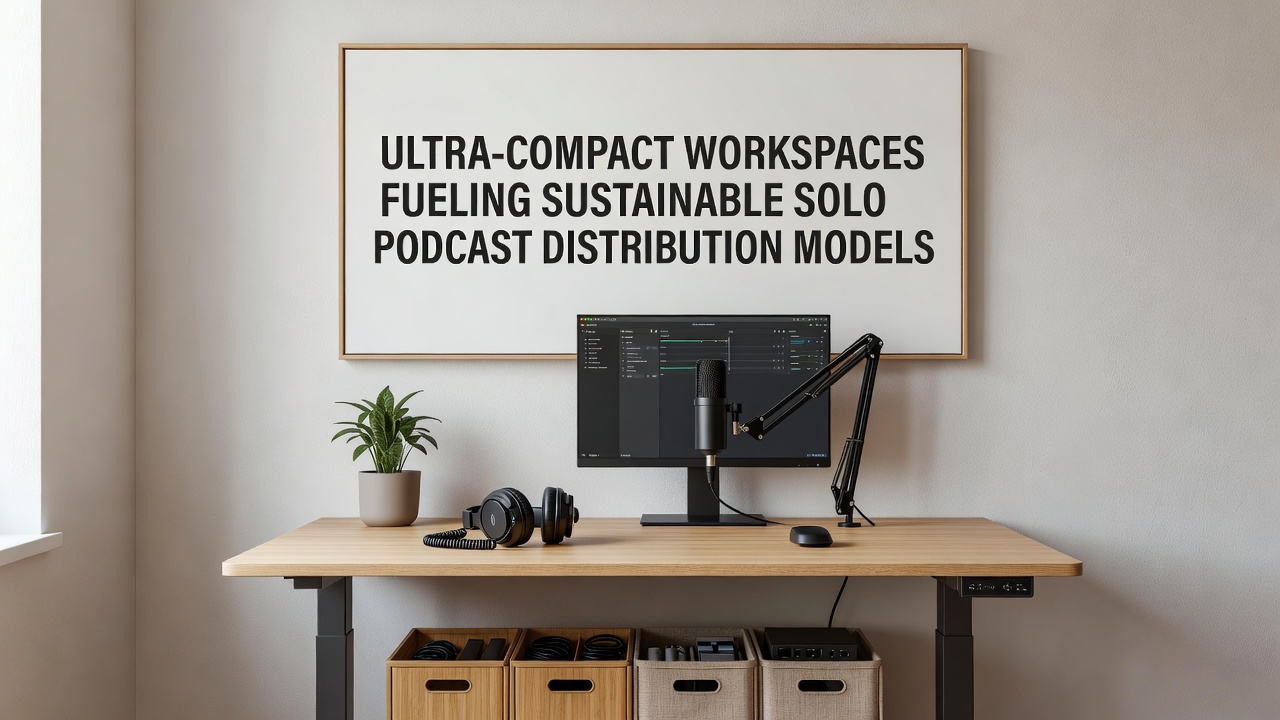
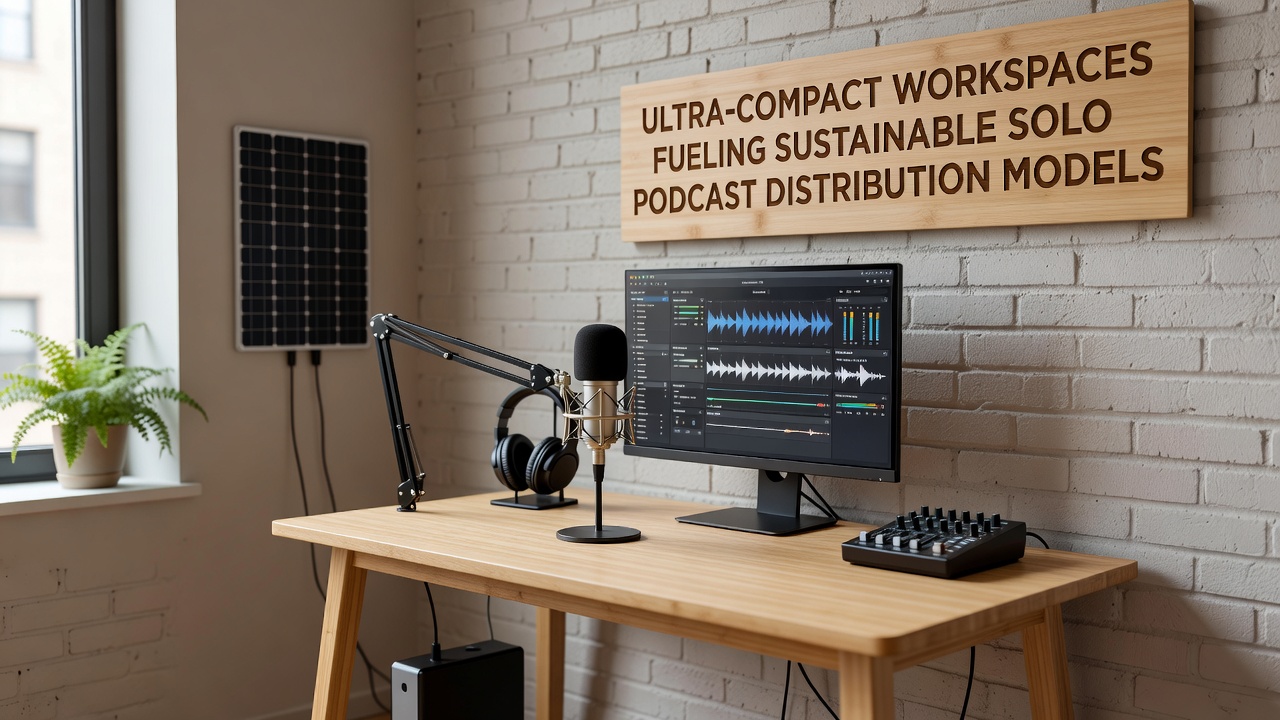
Ultra-compact workspaces have emerged as practical environments for solo creators who manage podcast production and distribution from limited square footage, and data from industry analyses indicate these setups support reduced operational costs while enabling consistent content delivery through digital channels. Observers note that many independent podcasters operate from spaces measuring under 100 square feet, where equipment selection prioritizes multifunctional devices such as USB microphones, portable interfaces, and cloud-based editing software that eliminate the need for extensive hardware arrays.
Space Constraints and Production Efficiency
Researchers tracking creator workflows report that compact environments encourage streamlined processes, since limited room forces prioritization of essential tools and discourages accumulation of redundant gear. Studies conducted by academic institutions in North America reveal that solo operators in these settings complete recording sessions in shorter timeframes because physical boundaries reduce setup variations and maintenance demands. In October 2026 figures released by digital media tracking groups showed a 22 percent increase in new podcast feeds originating from residential micro-spaces compared with the prior year, highlighting how such workspaces align with lean distribution pipelines that rely on RSS syndication and platform APIs rather than physical media shipments.
Distribution Models Supported by Minimal Infrastructure
Podcast distribution for these creators typically routes through centralized hosting services that handle bandwidth and metadata, which keeps resource consumption low and avoids the infrastructure investments required by traditional broadcast models. Data indicates that platforms processing millions of monthly streams have optimized their systems for individual uploads, allowing creators to schedule releases, embed transcripts, and track analytics without dedicated server maintenance. One documented case involved a producer operating from a converted storage area who maintained weekly episodes across three platforms by integrating automation scripts that pull directly from local storage folders, thereby minimizing manual intervention and energy use associated with larger facilities.
What's significant is the alignment between compact physical footprints and scalable digital reach, since distribution no longer depends on studio square footage but on network connectivity and software reliability. Evidence from European digital economy reports points to similar patterns where creators in dense urban housing units achieve audience metrics comparable to those using larger commercial spaces, provided they maintain consistent upload schedules and leverage cross-platform promotion tools.
Sustainability Metrics and Resource Allocation
Environmental accounting from research organizations shows that home-based micro-workspaces generate lower per-episode energy demands than shared studio rentals, primarily because heating, cooling, and lighting loads remain confined to residential baselines rather than dedicated commercial loads. Australian government statistics on small business operations from 2025 documented average electricity reductions of 18 percent among content creators who transitioned from co-working facilities to personal compact setups, attributing savings to eliminated commuting and shared equipment downtime. Those who studied these transitions note that distribution sustainability extends beyond energy, encompassing reduced material waste from avoided physical packaging and shipping associated with older media formats.
Yet the model depends on reliable internet infrastructure, and regulatory bodies in Canada have issued guidelines encouraging creators to select hosting providers with renewable energy commitments to further lower the carbon intensity of streaming delivery. Industry associations tracking audio content have compiled datasets indicating that solo operations using ultra-compact configurations maintain higher uptime rates for episode releases because fewer variables affect production continuity.
Case Examples from Independent Operators
Take one researcher who documented a creator in a Tokyo apartment whose entire workflow, from recording through distribution, fit within a 60-square-foot alcove equipped with noise-dampening panels and a single all-in-one interface. This setup supported distribution to over 15 directories via automated feed updates, and metrics collected over 18 months showed steady listener growth without proportional increases in operational overhead. Another instance from a Canadian prairie town involved a producer utilizing a basement corner to manage multilingual episodes, where cloud synchronization tools enabled seamless handoff between recording, editing, and publishing stages while keeping physical equipment to a minimum.
Observers note that such examples illustrate how space limitations can coincide with economic sustainability, since lower fixed costs allow reinvestment into promotion rather than facility expansion. Figures reveal that creators adopting these approaches often achieve break-even points earlier in their content cycles compared with those maintaining larger footprints.
Conclusion
Ultra-compact workspaces continue to intersect with solo podcast distribution by supporting efficient resource use, streamlined technical pipelines, and reduced environmental loads according to available datasets. As digital platforms refine their tools for individual creators, the operational advantages of minimal physical setups remain measurable across multiple regions and production scales.